
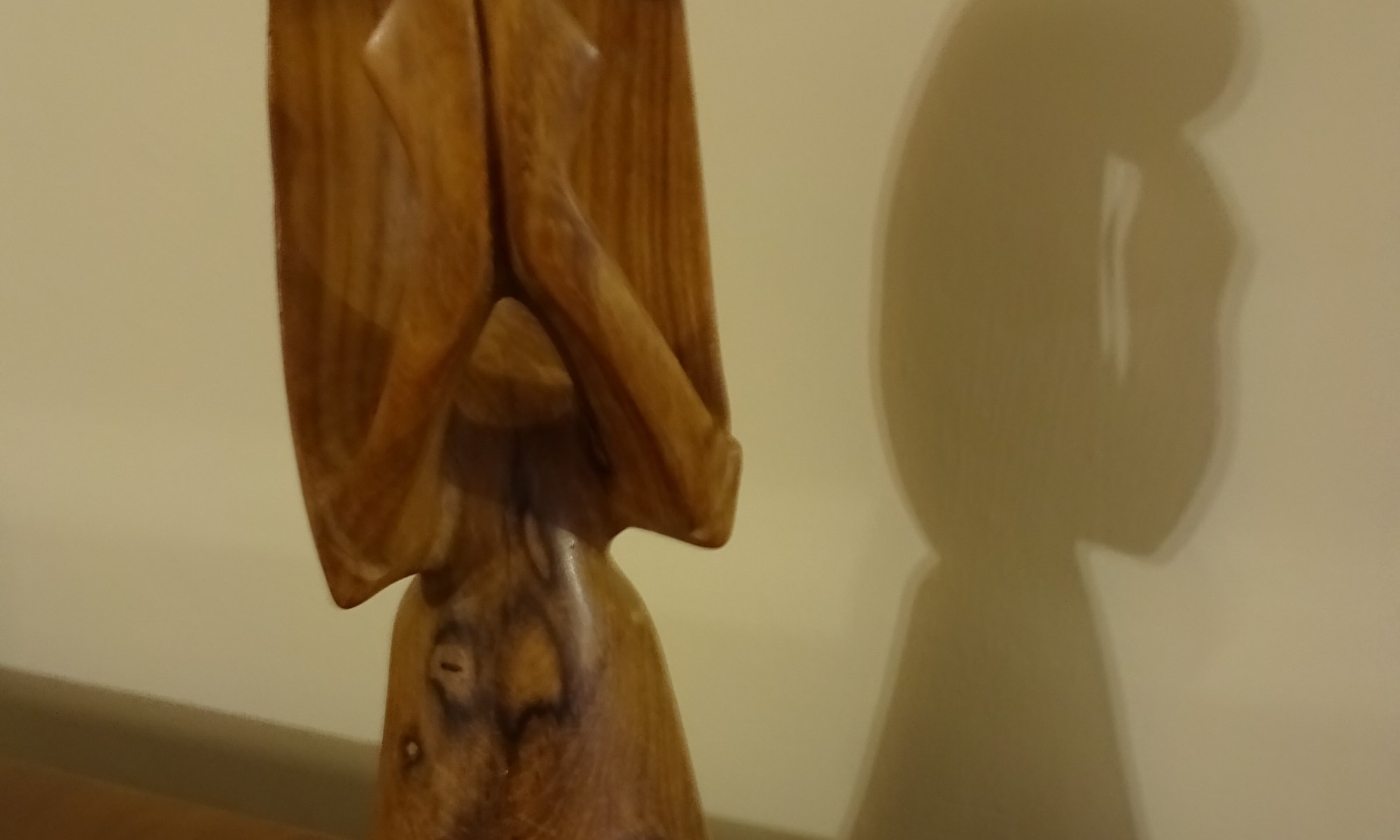
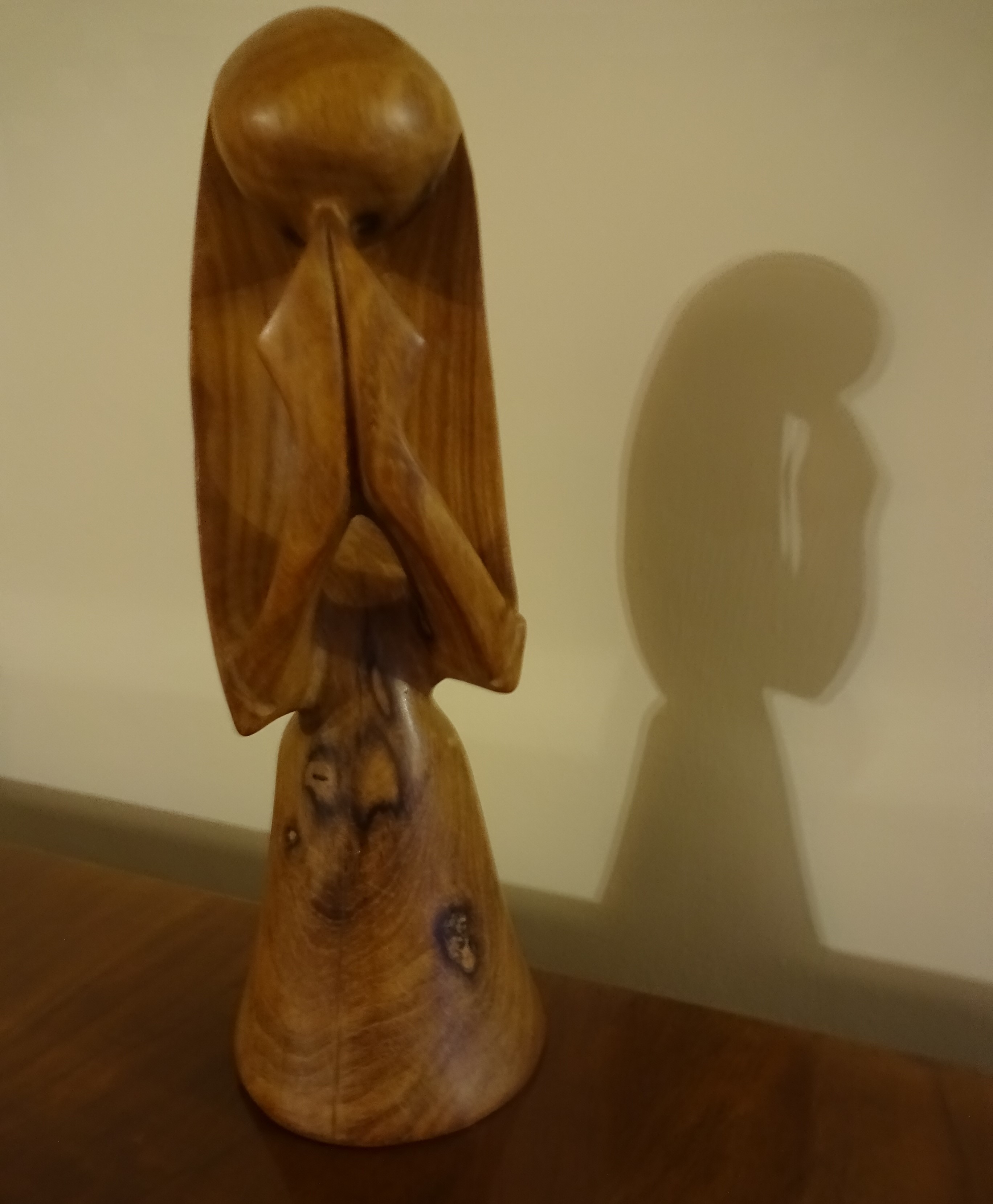
 If we were in this church 600 years ago today, we would be swept up in the great celebrations of the nativity (birthday) of the Blessed Virgin Mary (BVM). The statue of Mary, specially cleaned for the occasion, would have been processed around the parish with autumn flowers, plucked from hedgerows, being thrown in front of it. There would have been a lot of ale, singing, dancing and much merriment. Taking place at Harvest time, this celebration was known as ‘Lady Day in Harvest’. It is important to remember that most feasts were clustered around the agricultural year and all the major feasts around the solstices and equinoxes.
Today’s feast was celebrated by the church, but its spirit spread out and was shared by the whole community. The BVM, mother of Jesus, was widely revered, venerated and celebrated. Everyone joined in. One reason for Mary’s popularity is that ordinary women recognised themselves in her and, being the mother of God, she gave them hope. They believed she came from a humble background and, as such, she experienced the joys and pains of motherhood as well as the harshness of being a woman in medieval society.
But everything changed during the sixteenth century Reformation, a turbulent time when there was a dramatic shift in the practice of belief and faith. There was a turning away from traditional church practices, during which the honouring of many saints and the veneration of BVM were cast on the theological bonfire. This also had an impact on wider society. The veneration and respect shown to Mary, mother of Jesus, kept alive a certain respect for women. When one was lost, so was the other. Historians point out a link between the casting aside of the veneration of Mary and a dramatic increase in the number of women accused and executed for witchcraft.
But there is something deep in the psyche of society that needs a Mary-like figure. In poverty stricken countries of South America and Africa, Mary is popular for the reasons she was popular in Wootton Courtenay and, indeed, medieval England, all those years ago. Whether she is seen as Our Lady of Guadalupe (Mexico) or venerated among ordinary people struggling for liberation from political or social oppression, Mary has become a symbol of hope, new possibilities and liberation as well as the much loved and honoured mother of God.
 An intriguing string of events shows the significance of Mary, or a Mary-like figure, in our own country. In 1997, the whole establishment was rocked by the death of Princess Diana, killed in a car accident in an underpass in Paris, 27 years ago this week. The reaction to this tragedy was phenomenal and totally unexpected. There had been controversy around her relationship with the royal family and the way she had been treated. Views were, and are, polarised. But wherever one stands on all of this, there can be no questioning the profound impact that her death had upon the nation, and further afield. She was held in great affection by many and was called the ‘People’s Princess’ by the newly elected prime minister, Tony Blair. People expressed their grief by laying mountains of flowers in towns, cities and villages: sometimes they could be found in the centres of communities, at other times ‘wayside shrines’ sprung up as people placed them by telegraph poles and lamp-posts. Books of condolences were signed.
When the funeral took place, countless numbers flocked to London. Over 35.5 million people watched the funeral on television in the UK and one billion watched it world-wide. Three quarters of the adult population of Australia watched it on television. Elton John’s song, ‘England’s rose’, sung by him at the funeral in Westminster Abbey, sold 40 million copies. Emotions were high. There was grief and disbelief that such a young and beautiful life, a young mother, with her whole future before her should be taken in the way she was. There was also anger at the way that she had been treated by the establishment, especially when she had shown such care and empathy to those who had been cast aside by society – images of Diana holding the hands of people with HIV/AIDS when many thought the virus could be caught in such a way and of her, wearing a protective visor and flak jacket walking through a land-mine in Angola, immediately spring to mind.
 Psychologists, sociologists and theologians can spend a long time working out what was going on in the mind of society at the time, but I want to draw out how, consciously and sub-consciously, Diana was likened to Mary. So, how was Diana a Mary-like figure? Let me list six areas.
First, like Mary, Diana was regarded as a beautiful woman. Second, both were mothers of future kings. Third, like Mary, Diana was considered an outsider. Fourth, both Mary and Diana suffered in pursuit of their calling: Mary saw her son suffer and die; Diana was ostracised by the royal family. Fifth, both were identified with the poor and outcast: Mary because of her background, Diana by going out of her way to show compassion to those on the edge of society. Finally, both posed risks to the established order by highlighting the need for change. In Mary’s case this is characterised by the words of the Magnificat which we heard read a few minutes ago:
He has brought down the powerful from their thrones and lifted up the lowly; he has filled the hungry with good things and sent the rich away empty.
In Diana’s case it was through the way she indicated that the monarchy needed reforming.
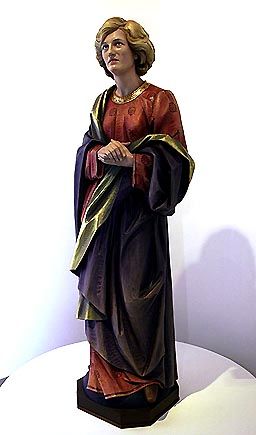
Princess Diana was consciously associated with the BVM after her death. The editor of the Spectator at the time of her death confesses to praying to her. In amongst the tons of flowers were cards and images depicting the BVM. As the hearse transporting Princess Diana’s body to her burial place left London, flowers were thrown in front of it, reminiscent of the medieval processions with which I began. Two years after her death, there was an exhibition at Liverpool’s Tate Gallery where one artist sculpted a statue of the BVM and gave her the face of Princess Diana.
All this can be interpreted in many ways, but I suspect there is some deep need, not just in church, but in society as a whole, for some Mary-like figure with whom society, especially those who feel left out and alienated, can identify, and who, by their life and example, embody the need for the establishment to change.
Our medieval forebears saw all this. Every so often, events, such as the death of Diana, force this question to the surface. But what about us? Mary is depicted all around churches in art, architecture and poetry: should we reconsider her role in church and society today? Perhaps that’s a conversation we need to have.
Devotion to Mary has given birth to many beautiful pictures, sculptures and poetry. Let’s end with one such poem, ‘The Nativity of Mary.’
God said: Let there be.
And you existed, Mary.
More radiant than the
glorious light of the stars;
More beautiful than the
colorful splendor of the flowers;
Sweeter than the honey of
the blossoms’ chalice;
Purer than the eternal
light of the sun.
Then God said: Behold, I come.
And you rejoiced in your love,
More jubilantly than the angels
at the beginning of creation.
Then you became silent
and sacrificed yourself.
As serving maid, you,
Most beautiful of all creatures,
became his own.
(Author unknown)
Sermon preached on 8th September, 2024 in All Saints’ Church, Wootton Courtenay, Exmoor, on the celebration of the nativity of the Blessed Virgin Mary.
Readings: Micah5.2-4; Luke1.39-56
 Bishop Brian Castle