
 Mother Maria Skobtsova was a Russian Orthodox nun who lived in the first half of the twentieth century. But she was not a nun in the kind of way we think about nuns. It was not until she was 41 years old that she was professed as a nun. By this time, this rebellious and radical thinker and writer, who had been an atheist for some years, had been married twice, divorced twice and had three children. Sadly, one of her children, her beloved daughter Nastia, died of meningitis at the age of five. The bereaved mother, devastated by her loss, fell into a pit of meaninglessness. She wrote,
Everything flies into the black maw of the fresh grave: hopes, plans, calculations and, above all, meaning, the meaning of a whole life.
She needed to re-assess her life.
It was six years later, in 1932, that she became a nun. She never joined a monastery: for Mother Maria, the monastic life was to be lived out in the world and not in the confines of religious buildings and so she spent the rest of her life working among the poor, the suffering and the outcasts in Paris where she had settled. She believed that she was being called to welcome and care for those in desperate need. With the support of her local bishop she acquired a house and then, later, a sanitorium. She never wanted to turn away anybody who came to her door. Mother Maria was like a mother to them. She had to beg for food and went without herself in order to feed the residents of her house.
 Mother Maria experienced and learnt a great deal about suffering. The situation became even more acute when, in June 1940, Paris fell to the advancing German army. Mother Maria could have left Paris, but she did not want to abandon those for whom she was responsible and so she remained. When the Nazi intentions against Jews became clear, many Jews knocked on her door and she took them in and, with her co-workers, found them routes of escape to safer places. She said that if anyone came to her house looking for Jews, she would show them an icon of Mary, mother of Jesus. Mother Maria’s door was open to all, regardless of nationality and belief.
I share the story of Mother Maria with you today, Mothering Sunday, because motherhood is one of the lenses through which she makes sense of the sufferings that surrounded her. In addition, it helps us as we view the sufferings in our world and our lives. She also shines some light on ways that we can respond to the suffering of others so that something can be drawn out of that pit which leads so easily to despair and meaninglessness. It is important to remember that her writings are based on her experiences. Mother Maria’s reflections are shaped and fed by her devotion to God, her devotion to the poor and suffering and her devotion to another mother, Mary, mother of Jesus Christ.
Mother Maria sees Mary as the mother who suffers. The Blessed Virgin Mary is also known as Our Lady of Sorrows. In our reading this morning, the old priest Simeon warns Mary about the suffering she will encounter when he says to her, ‘…a sword will pierce your own soul too.’ And so it proved to be. Mother Maria reflects on the time when Mary watches her son die on the cross: she suffers deeply not because she has chosen to suffer, but because Jesus is her own flesh and blood and a mother has no choice but to suffer when her child suffers. It is instinctive. Mother Maria calls this ‘unchosen’ suffering. Of course, Mother Maria would know this personally because she had to watch her daughter die. Such unbearable suffering is happening to mothers across the world today: we remember especially mothers in Ukraine and Russia, in Israel and in Palestine facing the loss of their children because of war. We remember, too, those mothers in Nigeria whose children have been kidnapped from school. And there is more, much more. It will be happening closer to home, mothers having to face the death of their children through illness or maybe, as has been highlighted a lot in the media recently, through violence. It may have happened to mothers here, this morning.
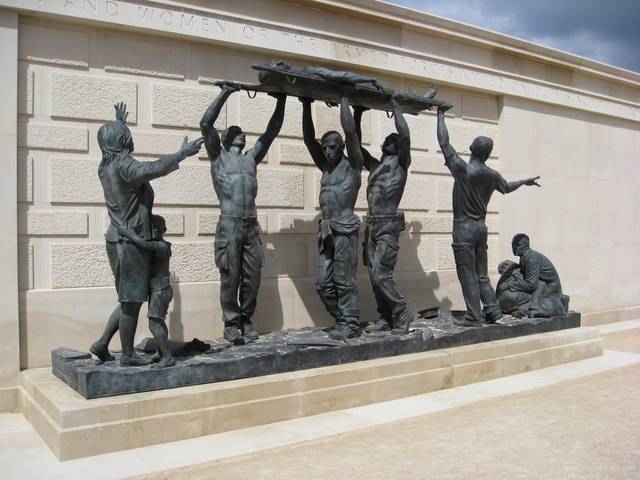 Mother Maria reminds us that we are all involved in all human suffering because we all share flesh and blood. Our response to the pain of others is as instinctive (‘unchosen’) and non-negotiable as a mother’s involvement in her child’s suffering. We cannot help being touched by the suffering of others, near and far, because of our shared humanity. Also, there is a solidarity in suffering which transcends all political, social and religious boundaries. To deny this solidarity, to anaesthetise ourselves from the pain of others, is to deny our humanity: we would not be living as fully as we could. In a very different context, poet John Donne reminds us of this solidarity when he writes:
No man is an island, entire of itself; every man is a piece of the continent, a part of the main; if a clod be washed away by the sea, Europe is the less…….any man’s death diminishes me, because I am involved in mankind, and therefore never send to know for whom the bell tolls; it tolls for thee.
Furthermore, recognising our involvement in the world’s suffering can give us the push to prevent it in the places it can be prevented and sit with it in the places it cannot be prevented. Suffering, wherever it happens, is unacceptable and cannot be justified. Much, though not all, of the world’s suffering, can be prevented.
How can we respond to suffering to help ward off despair and meaninglessness?
 Whenever we send money to a charity to help those in great need –it is an expression of solidarity and a sign of humanity at its best. When we agitate to prevent the suffering that can arise from disputes and wars – it is an expression of solidarity and a sign of humanity at its best. Sadly, there is some suffering we cannot prevent, no matter how much we would like to….the suffering of friends and loved ones in distress and illness. Simply being there can alleviate the suffering and is an expression of solidarity and a sign of humanity at its best.
I want to end by going back to the life of Mother Maria. While working and living with those in need which involved fearlessly supporting Jews in Nazi-occupied Paris, Mother Maria commented at one point, ‘It is amazing that the Germans haven’t pounced on us yet.’ But on 10th February, 1943, they did pounce. Mother Maria was arrested and taken to Ravensbruck Concentration Camp. She was executed on Good Friday 1945 as the gunfire of approaching liberation forces was drawing closer. We don’t know for sure the circumstances around her death, but some say that she took the place of another prisoner.
Reflection given at ‘Songs of Praise’ on Mothering Sunday (10th March, 2024) in Wootton Courtenay, Exmoor. Somerset.
Reading: Luke 2.33-35
 Bishop Brian Castle